Slipstream's 2026 CARD grants: Moving efficient, cost-effective retrofits forward in Minnesota
Slipstream will lead five new, multiyear projects funded by grants through the Minnesota Department of Commerce's Conservation Applied Research and Development (CARD) program. These research projects will help the state of Minnesota design cost-effective strategies to make existing buildings more efficient and sustainable.
Slipstream and our partners will receive $1.6 million under these grants, which are part of the 21 projects awarded $5.6 million in total grants under CARD's 2026 cycle of awards.
Visit our page on each project to learn in greater detail about this research. Once completed, these projects will help Minnesota residents save energy, lower long-term costs, and reduce carbon emissions from all kinds of existing buildings.
Phasing out industrial compressed air systems
R+I Leads: Adrian Rivera, Joe Zhou
This study will help Minnesota businesses save money and energy by rethinking the ways that factories and worksites use compressed air. Identifying new approaches can help Minnesota design programs that save businesses money on operating costs while conserving energy throughout the entire industrial sector.
While compressed air is useful for many jobs, it's also one of the least efficient ways to use energy, especially compared to less-intensive alternatives such as electric linear motors. Slipstream's engineers will map the key sources of energy waste from compressed air and recommend ways to replace unnecessary uses with more efficient tools or processes.
Heat pump water heaters for retrofits with constraints
R+I Lead: Dani Ball
Partners: Center for Energy and Environment (CEE), New Buildings Institute
This research addresses a major hurdle to electrifying domestic water heating in as many homes as possible. Standard heat pump water heaters (HPWHs) are a good fit for many single-family homes, but they can barely squeeze in among the tight spaces and electrical constraints of multifamily units and manufactured homes. Researchers from Slipstream and our partners at CEE and NBI will assess the potential of more compact models of HPWHs to serve buildings where space is limited, whether in the utility closet or the electric panel.
A potential second phase of the study will put these alternatives to the test in real-world settings. The findings will help Minnesota lower carbon emissions in more homes, expand access to high-efficiency electric technologies to more residents, and prepare contractors to install the right technologies in the right kinds of homes.
This research builds on a prior study on 120-volt HPWHs conducted by Slipstream and co-funded by Xcel Energy, Focus on Energy, ComEd, and Consumers Energy.
Partial displacement of commercial boiler space heating with air-to-water heat pumps
R+I Leads: Sammie Lundin, Connor Jansen
Hydronic heating systems fueled by gas boilers serve most of the largest commercial and multifamily buildings in Minnesota. Finding ways to move these systems from natural gas to efficient, all-electric alternatives is a big challenge. Slipstream's analysts will determine how and where the state can make a dent in the state's overall use of fossil fuels for space heating and cut back on a significant source of carbon emissions.
This study will explore cost-effective approaches for Minnesota to displace much of the annual heating load from gas boilers with electrified heating from air-to-water heat pumps (AWHPs). Other northern states have installed AWHP systems in commercial and multifamily buildings, but this study is one of the first to explore their potential in the Midwest.
Improving manufactured home HVAC performance and sizing
R+I Leads: Shannon Stendel, Cynthia Segura
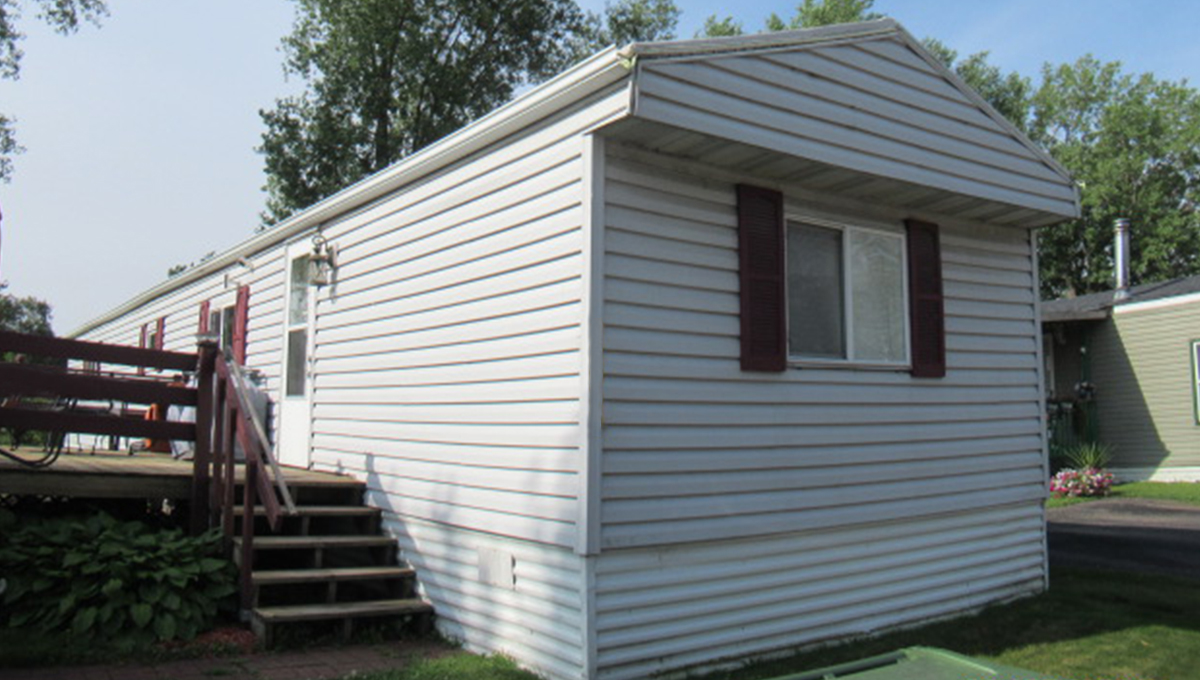
This study will help improve the comfort, affordability, and long-term stability of manufactured homes across Minnesota. In our work across research, energy assessments, and critical-repair programs, Slipstream's experts on manufactured homes have encountered a clear need to improve the performance of HVAC systems in this key source of lower-cost housing. This research will develop better guidance for Minnesota's contractors and energy professionals to take practical, proven steps to help residents live more comfortably, lower their energy bills, and maintain healthier, more efficient homes.
Energy savings from dual-fuel controls optimization
R+I Lead: Dani Ball
Partners: CEE
In cold climates like Minnesota, many homeowners choose to pair an air-source heat pump with a natural-gas furnace for backup heat. This dual-fuel setup is an attractive short-term solution to electrification that can help people lower their carbon footprint while keeping their toes reliably warm in the winter. This research builds on previous Midwest studies to address the common challenges of operating these hybrid systems.
The project team will develop clear, practical guidance for utilities, contractors, and homeowners to set the proper controls for dual-fuel systems that keep both operating costs and carbon emissions as low as possible. These findings will inform future utility programs and consumer education efforts to expand efficient, affordable home heating across Minnesota.
Slipstream will also contribute to two CARD projects led by CEE. Like the other projects, these studies will serve Minnesota with insights and information to roll out carbon-saving technologies in homes and businesses throughout the state.
A practical guide for successful HPWH implementation
Residential heat pump water heaters (HPHWs) have undergone extensive technical advancement over the past 10 years. This project will close the gap between long-standing negative HPWH assumptions and data which proves their efficacy and cost-effectiveness in Minnesota homes.
Smart control valve energy savings for chilled water HVAC systems
As smart control valves are uncommon in Minnesota, this field project will address the lack of awareness and adoption by generating and disseminating quality field data and case studies demonstrating the energy, cost, and carbon savings impact of smart valves.
Slipstream's researchers have led studies in both these technologies for Midwest utilities. We look forward to collaborating with CEE to provide Minnesota with a clearer runway to meet its climate goals.