Slipstream to support greater energy resilience of five Great Lakes communities in the Energy Technology Innovation Partnership Project’s Cohort 5
A new cohort of 38 coastal, remote, and island communities is joining the Energy Technology Innovation Partnership Project (ETIPP), and Slipstream will support five communities in the Great Lakes Region as they explore solutions for reliable and affordable energy systems.
ETIPP is a U.S. Department of Energy technical assistance program that pairs coastal, remote, and island communities with national laboratory researchers and regional partner organizations, including Slipstream, to tackle local energy challenges through planning and deep-dive technical projects. Now welcoming its fifth cohort, the program has supported more than 80 communities in eight regions across the United States and its territories with projects that include strategic energy planning, energy generation and storage assessments, weatherization, energy system optimization modeling, and other in-depth energy analysis projects.
Slipstream has already supported two communities in the Great Lakes Region through ETIPP's first four cohorts and will continue working side-by-side with local governments, community-based organizations, Tribal Nations, and other groups in finding energy solutions that match the area’s geographic, cultural, and economic contexts. With the latest cohort, Slipstream will facilitate strategic energy planning, technical expertise, and energy modeling to address the unique challenges of communities that include Tribal Nations and municipalities on the shores of Lake Michigan and Lake Superior.
"Our latest ETIPP communities range from shoreline cities at risk of storm surges to Tribal Nations whose aging infrastructure hampers their pursuit of energy sovereignty," said Slipstream engineer Robert Kline. "Slipstream is committed to supporting all our ETIPP communities with the knowledge and resources they need to plan a future built on more affordable, more reliable energy systems."
More information on the five communities in the new Great Lakes cohort can be found below.
Benton Harbor, Michigan
Benton Harbor, Michigan, is a small community on Lake Michigan that faces challenges associated with aging energy infrastructure and experiences frequent outages. The community has a federal poverty rate of 43% and falls in the 95th percentile nationally for residential energy cost. ETIPP strategic energy planning will help Benton Harbor evaluate local, cost-effective energy options to lower energy bills, upgrade infrastructure, and boost energy efficiency for a more affordable, reliable energy system.
Gary, Indiana
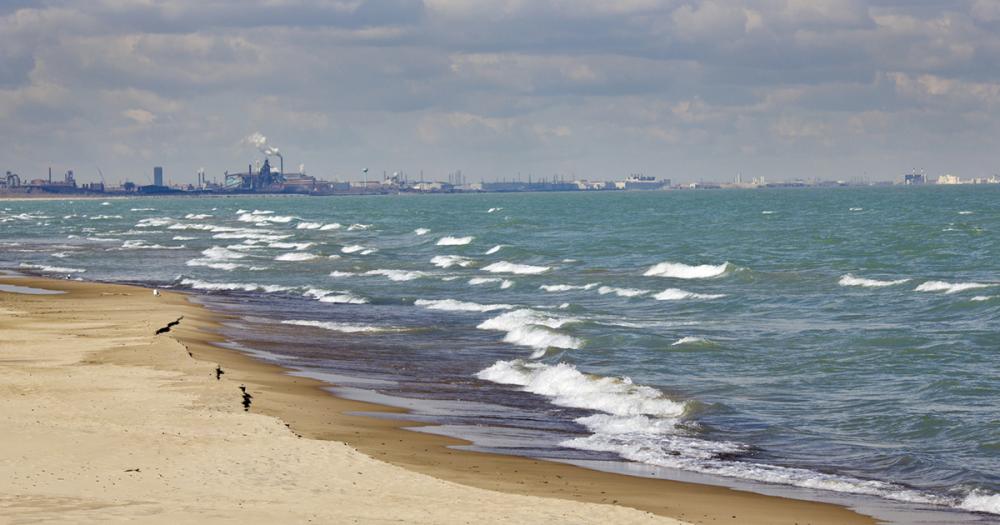
Because of its proximity to Lake Michigan, Gary, Indiana, experiences increased flooding risks from heavy precipitation and storm surges that damage energy infrastructure and leave the community at risk. Gary received strategic energy planning support from ETIPP to (1) conduct a baseline assessment of energy usage and needs at critical city buildings and (2) identify options for on-site generation to provide essential community services during outages. Building on this project, Gary will leverage ETIPP technical expertise to further analyze on-site generation feasibility at several critical facilities, model energy efficiency scenarios and retrofits, and collaborate with the local utility to identify advanced metering strategies to more efficiently detect and address outages.
Grand Marais, Minnesota
As the seat of Cook County, Grand Marais, Minnesota, provides essential services and commerce for the isolated and sparsely populated county. However, its reliance on a single transmission line makes the community vulnerable to energy disruptions. ETIPP will help Grand Marais evaluate options that reduce load stress on its current system, which is nearing capacity, to improve the system’s reliability and security.
Lac Vieux Desert Band of Lake Superior Chippewa Indians, Watersmeet, Michigan
The Lac Vieux Desert Band of Lake Superior Chippewa Tribe in Watersmeet, Michigan, experiences energy reliability challenges exacerbated by aging buildings and infrastructure. ETIPP will perform modeling and analysis on microgrid and battery storage feasibility to add redundancy and improve the reliability of the Tribe’s energy system.
Menominee Indian Tribe of Wisconsin
The Menominee Tribe of Wisconsin resides on a remote, 234,355-acre reservation with aging infrastructure. ETIPP will evaluate options for integrating local energy generation into existing infrastructure for a hybrid microgrid system, creating redundancy for more reliable and secure energy for the Tribe. Additional support will assess distribution system capacity, provide system modeling and financial analysis for microgrid and biomass projects, and explore a market analysis for revenue generation from energy assets.