Monitoring studies show us the human side of building performance
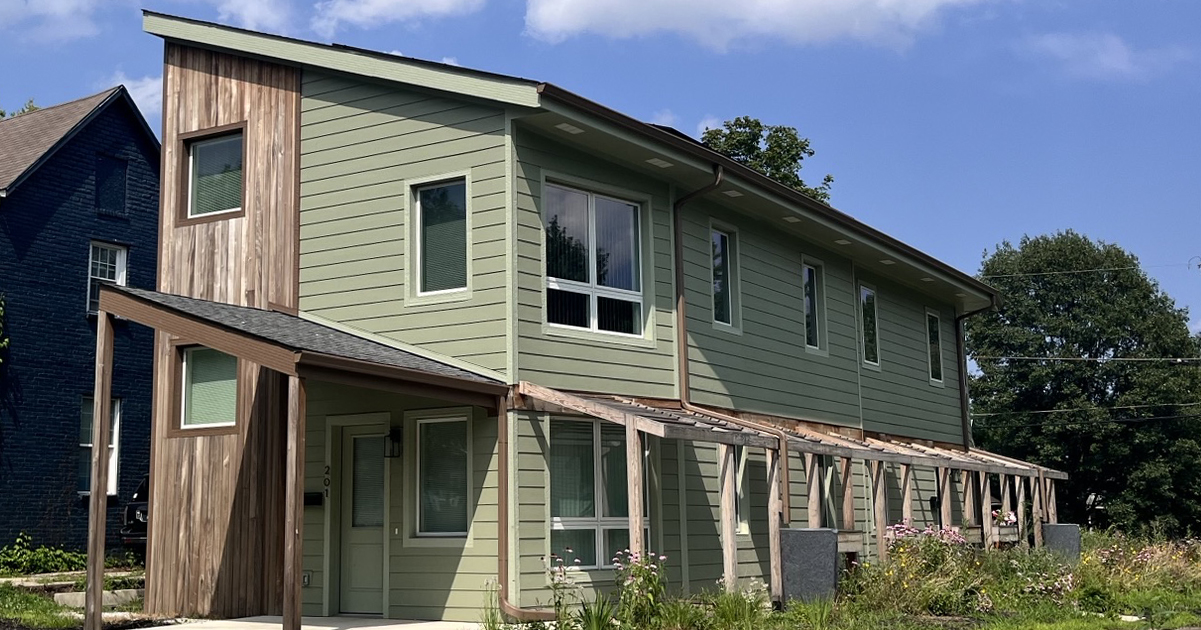
A few years ago, students at Ball State University completed the challenging task of designing a net-zero home—and won the Solar Decathlon for their design for an affordable housing duplex.
According to the students' project summary, the Alley House "addresses gentrification pressure, promotes neighborhood revitalization, and facilitates lifestyle growth for local families." The winning design emphasizes the benefits of high-performance building design to residents with low incomes, particularly around comfort, health, and well-being.
When the Alley House project broke ground, the building design resulted in two distinct units: one unit built to passive house standards (certified as Phius Core 2021) and the other to above code.
The Alley House offered an opportunity to compare the building's high-performance design against the actual energy use once residents occupied the space. Slipstream monitored, analyzed and compared the thermal performance, mechanical ventilation, and energy loads of the two units from July 2024 to June 2025.
The results showed how occupant behavior, equipment failures, and other factors often go overlooked once residents move in.
What we learned
People matter. How residents use their home impacts how a building performs compared to how it is designed.What surprised us
Multiple systems (ERV, PV, and heat pump water heaters) had issues impacting residents and their energy bills, which may go unnoticed once residents move in.What it means
Field monitoring studies deliver valuable insights into the actual performance of buildings and help identify unseen issues with equipment and systems that impact residents.What we found:
The project team installed field monitoring equipment in July 2024 to track electric power on individual circuits, indoor air temperature, and fan operation. We also tracked activity for the homes' various energy-efficient systems, including air-source heat pumps (ASHPs) for heating and cooling, heat pump water heaters (HPWHs), and a rooftop photovoltaic (PV) system.
We gathered data for each unit individually:
- East unit built to above building code (which we'll call "East-Code")
- West unit: Phius Core 2021-certified (which we'll call "West-PH")
We've summarized some of the most surprising findings from this data.
Residents with low incomes may be hesitant to use mechanical cooling
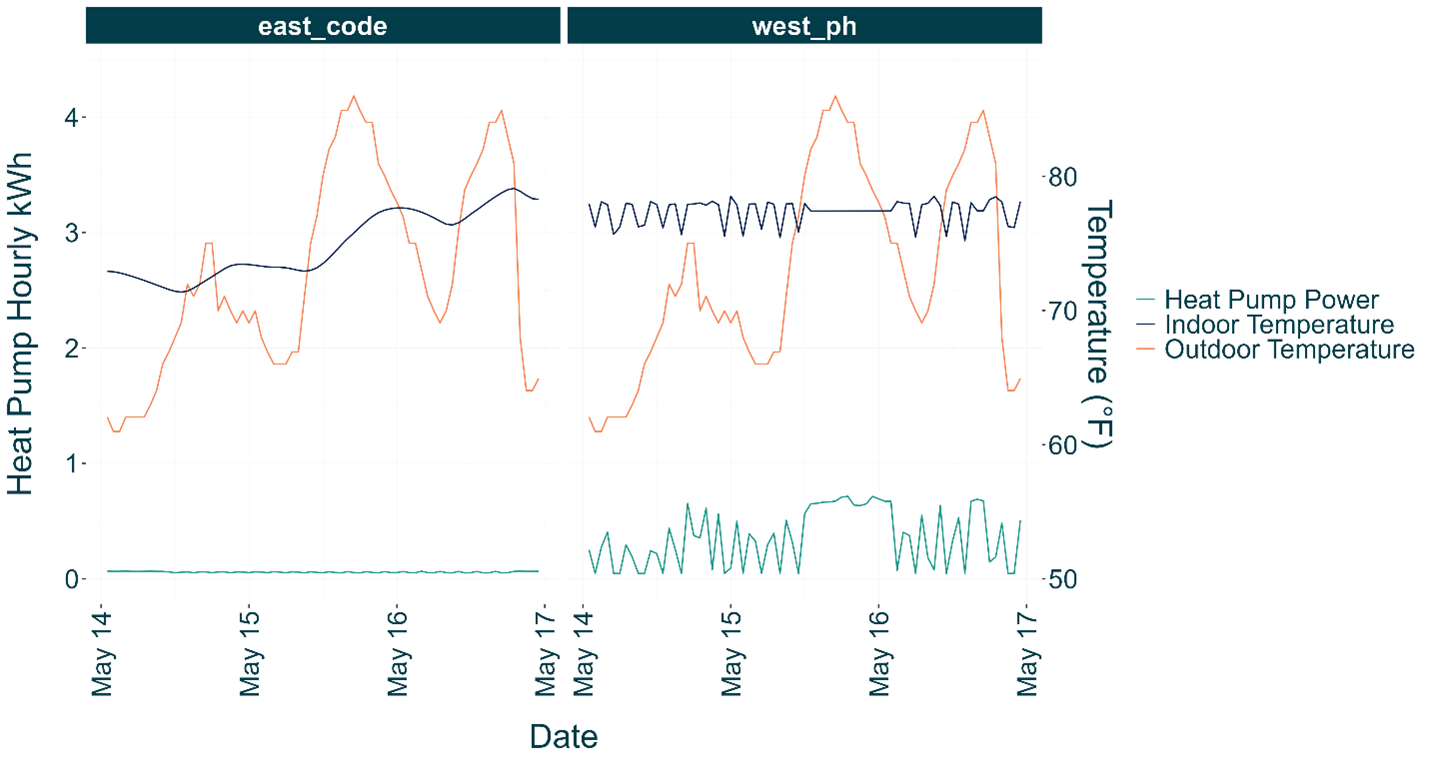
Residents in the East-Code unit used more heating, but much less cooling than the West-PH unit. We learned from Ball State staff that the East-Code resident thought mechanical cooling was expensive and chose to open windows rather than use the heat pump for air conditioning.
As a result, the indoor temperature steadily increased in warmer weather, as shown in this mid-May example when the heat pump was not used for cooling. Contrast that with the West-PH unit, which consumed more heat pump power but maintained a stable indoor temperature:
Equipment failures are more common than you'd think
While installing the monitoring equipment, we discovered an issue with the energy recovery ventilator (ERV). Further investigation revealed that the ERV controls had been inadvertently set to cycle between two-way ventilation and recirculation, and thus the ERV spent most of its time in recirculation mode. Though this issue was resolved, we were unable to measure the intake flow to confirm residents are getting the full benefits an ERV can provide. This is an example of an important energy-efficiency measure not working as expected that could (and likely would) go completely undetected by occupants.
Even when it's not failing, equipment still might not be working as it should—and it impacts residents
The HPWHs in both units operated in electric resistance mode for most of the study period, even though the units showed they were in hybrid mode. We believe the issue was ultimately caused by a failure of the HPWH compressors. The building owner was notified of the issue, which would have a tangible impact on residents' bills if left unresolved.
Residents benefit from solar-related alerts
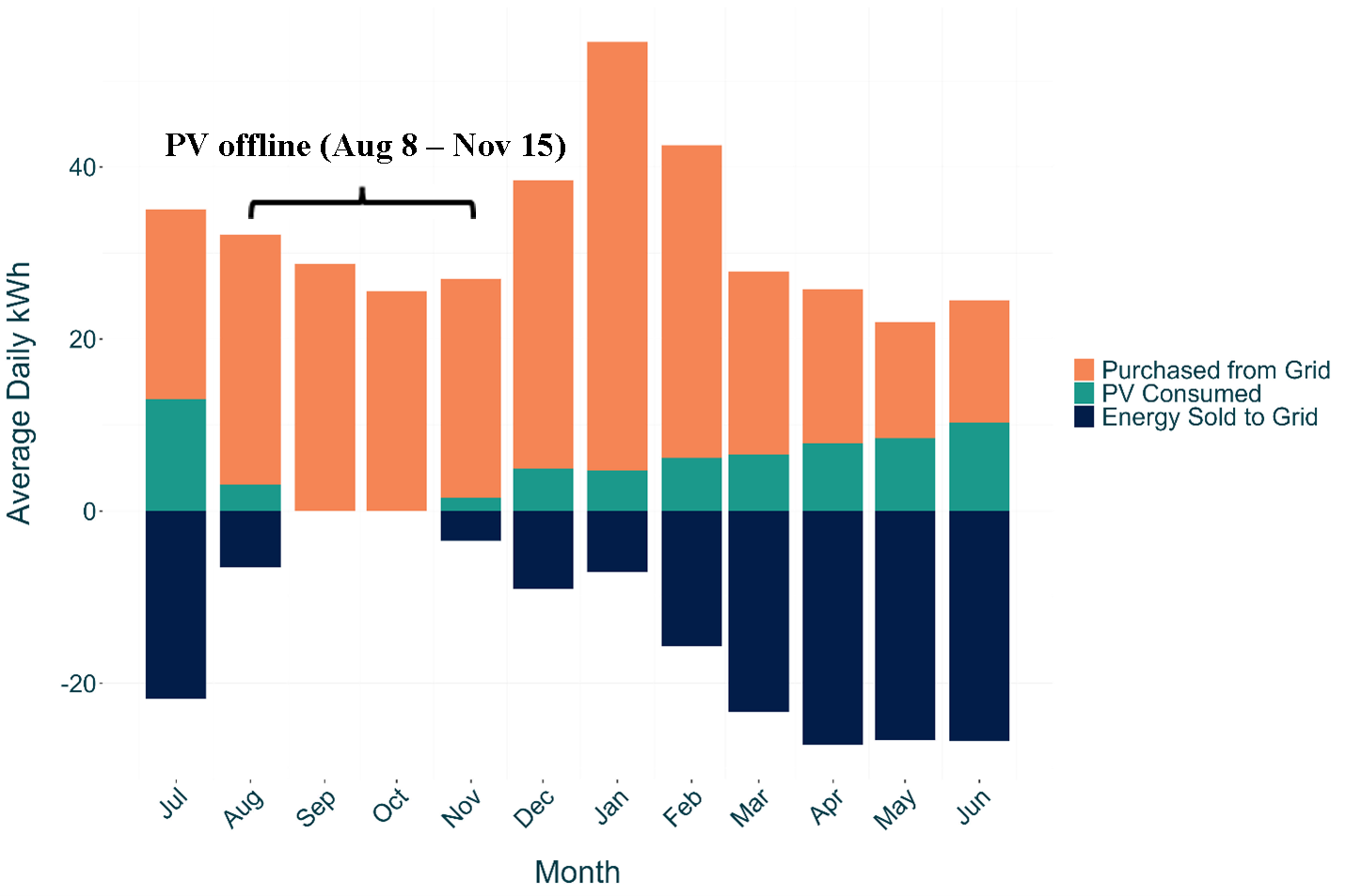
During the monitoring period, our team noticed the 8.8 kW PV system had no production in the West-PH unit from August 8 to November 15. Residents noticed a change in their bill, but they were not receiving alerts letting them know their PV system was not producing as expected.
Once the issue with the PV was resolved, the monitoring data reflected the expected benefits of solar generation. From March onward, a noticeable portion of the building's energy is supplied directly by the PV system, with surplus generation resulting in significant delivery to the grid. By April through June, exported PV electricity exceeds onsite consumption.
Had residents been included in the PV system notifications, they could have addressed it through the proper maintenance channels and taken advantage of the PV production during the summer months, lowering their energy bill over the course of the full year.
Human behavior is a gamechanger
Occupant behavior and the number of occupants impacts energy use in impactful ways. According to the building management team, the number of occupants in the East-Code unit stayed consistent through the study with one adult and one dependent. The West-PH unit was occupied by one adult and two children at the beginning of the study and—we believe—two adults and three kids at the end of the study.
There was a big difference in the typically behavior driven miscellaneous energy loads between the units where it was 8.84 kWh/day in the West-PH unit —nearly twice that of the East-Code unit (4.25 kWh/day), and almost as much as the West-PH unit's heat pump consumed alone (9.45 kWh/day). While removing the monitoring equipment the team noted gaming systems and more televisions in the West-PH unit.
The human factor cannot be understated. Once residents occupy a building, no matter the design, it is nearly impossible to predict the expected kWh of daily life.
Recommendations:
As an industry we're pretty darn good at building tight building shells, but we have more work to do when it comes to commissioning and helping residents ensure equipment functions as expected. We can't just construct a theoretically sound building and walk away.
Equipment can fail. Controls can be set incorrectly. People live their daily lives in different ways.
On their own, all these issues are normal, perhaps even expected, but this simple field monitoring project of a duplex in Indianapolis demonstrated opportunities where the industry can do better.
For various new construction or retrofit projects, we recommend the following:
Monitor systems and performance over time to confirm the benefits of high-performance design or major retrofit measures. No matter how much you've crunched the numbers, there's no accounting for human behavior or equipment failure. Even when installers do everything correctly, things can still fail in unexpected ways with downstream effects on building performance and resident bills.
Engage residents over a period of time to ensure the systems are being used and are working properly. Supporting the residents over time and through seasonal changes could lead to increased behavior change adoption and improved equipment maintenance, especially of technologies residents are not familiar with, such as a heat pump versus a window AC unit—or no previous AC at all.
Ensure the people paying the bills have access to notifications on how systems are performing. Residents noticed something was off on their utility bill, but they were disconnected from the PV notifications letting them know something was wrong. Even if residents should not reasonably be expected to troubleshoot a complicated system, access to notifications can support their right to fully enjoy a comfortable, efficient, affordable home.